Cleopatra VII is often remembered for romance and glamour, but her true legacy lies in her formidable intellect and strategic mastery. Could a ruler’s power truly be rooted in wit, diplomacy, and cultural savvy rather than beauty? Cleopatra’s mastery of multiple languages, her patronage of learning at Alexandria, and her diplomatic alliances with Julius Caesar and Mark Antony reveal a leader whose strength was built on knowledge and adaptability. Far from a mere seductress, she navigated internal rivalries and external threats with sharp insight, preserving Egypt’s independence amid a turbulent era. Modern portrayals now emphasize her as a brilliant strategist and scholar, challenging outdated stereotypes and illustrating that true leadership depends on mental agility, cultural awareness, and resilience. Her enduring influence demonstrates that the greatest power resides in the mind—an inspiring legacy that continues to redefine leadership and influence across centuries.
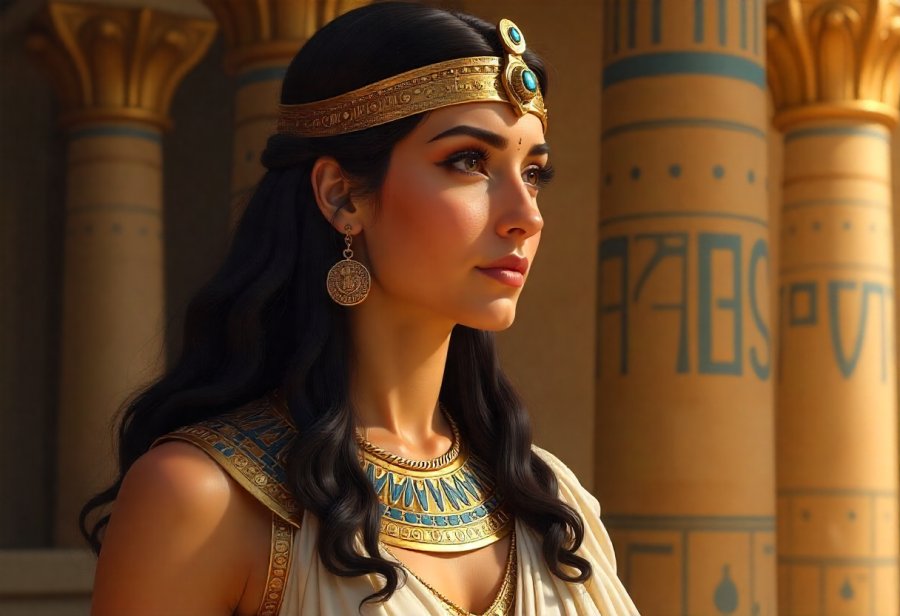
Unveiling Cleopatra’s True Power: Intelligence and Strategy Beyond Beauty
Cleopatra VII is often remembered for her beauty and romantic stories, but her true legacy runs much deeper. She was a sharp, strategic leader who mastered the art of navigating a complex political landscape with intelligence and finesse. Her reign was marked by clever diplomacy, a passion for learning, and a deep understanding of both Egyptian traditions and the wider Hellenistic culture. Cleopatra knew that real power didn’t come from looks alone; it stemmed from wit, knowledge, and the ability to adapt quickly to changing circumstances.
While popular tales tend to focus on her allure and personal charisma, they often overlook the core of her influence. Cleopatra’s leadership was rooted in her intelligence—her mastery of multiple languages, her scholarly pursuits, and her diplomatic skills. Fluent in Egyptian, Greek, and Latin, she was able to communicate directly with diverse audiences, forging vital alliances and earning loyalty across different factions. Her cultural and intellectual interests weren’t just hobbies—they were strategic tools that helped her secure and maintain her power.
Her story is also one of resilience. Cleopatra faced internal family rivalries and external threats from expanding empires, yet she demonstrated an exceptional ability to read her environment and act decisively. Forming alliances with her brother early on, and later with powerful Roman figures like Julius Caesar and Mark Antony, she showed a keen understanding of political dynamics. Her ability to think several steps ahead and adapt her strategy made her a formidable ruler in turbulent times.
Looking beyond her personal story, Cleopatra’s intelligence and strategic mindset shaped her enduring legacy. She used her wit and diplomatic skill to preserve Egypt’s independence and elevate her influence on the world stage. Her leadership was characterized by her capacity to foster loyalty, manage crises, and forge alliances—traits that kept her at the top despite the shifting tides of history. Cleopatra’s story reminds us that true power often resides in the mind, not just in appearance or reputation.
Focusing on her mental acuity offers a different perspective from the typical tales of glamour and romance. It reveals a leader who wielded her knowledge and strategic thinking as her greatest weapons. Cleopatra’s legacy endures because she proved that intelligence and adaptability could leave a lasting impact, far beyond the superficial stories that have long overshadowed her real accomplishments. Her story continues to inspire, showing that leadership rooted in intellect can shape history as profoundly as any empire or throne.
Origins and Rise: Tracing Cleopatra’s Lineage and the Tumultuous Landscape of Ancient Egypt
Cleopatra VII was born into the Macedonian Ptolemaic dynasty, which had ruled Egypt since the death of Alexander the Great’s general, Ptolemy I Soter, in the late 4th century BCE. Unlike native Egyptian rulers, her family maintained a distinct Greek identity, emphasizing their Macedonian roots while blending in Egyptian customs to legitimize their authority. This created a unique cultural landscape where Greek language and traditions intertwined with Egypt’s ancient religious practices.
Her ancestors inherited a kingdom riddled with internal rivalries and external threats. From Ptolemy I onward, the dynasty faced constant power struggles within the family and challenges from neighboring states. Egypt, once a dominant empire, was now navigating a shifting world influenced heavily by Hellenistic culture and the rising power of Rome. Cleopatra’s lineage gave her a blend of Greek sophistication and Egyptian tradition, which she later used to her advantage.
The period of her reign was marked by external pressures and internal instability. After Alexander’s empire was divided among his generals, Egypt fell under Macedonian Greek control. The Ptolemies emphasized their Hellenistic identity, establishing Alexandria as a hub of learning and commerce. The city’s famed Library of Alexandria symbolized the intellectual spirit Cleopatra would later champion, fostering scholarship and cultural exchange.
Her rise to power was anything but straightforward. Upon her father’s death, she faced immediate threats from rivals eager to claim the throne, including her own brother. Demonstrating her strategic mind early on, Cleopatra formed alliances—initially co-ruling with her brother Ptolemy XIII—allowing her to consolidate her position. Her ability to navigate court politics through diplomacy and cunning laid the groundwork for her later leadership.
As Egypt’s independence waned, Cleopatra recognized the importance of aligning with Rome’s powerful figures. Her relationship with Julius Caesar began as a calculated move to outmaneuver her rivals, but it quickly became a strategic partnership that helped her maintain control. Her later alliance with Mark Antony further exemplified her skill in balancing internal governance with external diplomacy, always with her eyes on preserving Egypt’s sovereignty.
Throughout her life, Cleopatra’s background in a culturally diverse and politically volatile environment shaped her into a leader who understood the importance of adaptability. Her Macedonian roots, combined with her deep knowledge of Egyptian traditions, allowed her to craft a rule rooted in both Greek and Egyptian worlds. This dual identity enabled her to connect with various factions, reinforcing her authority and resilience in times of crisis.
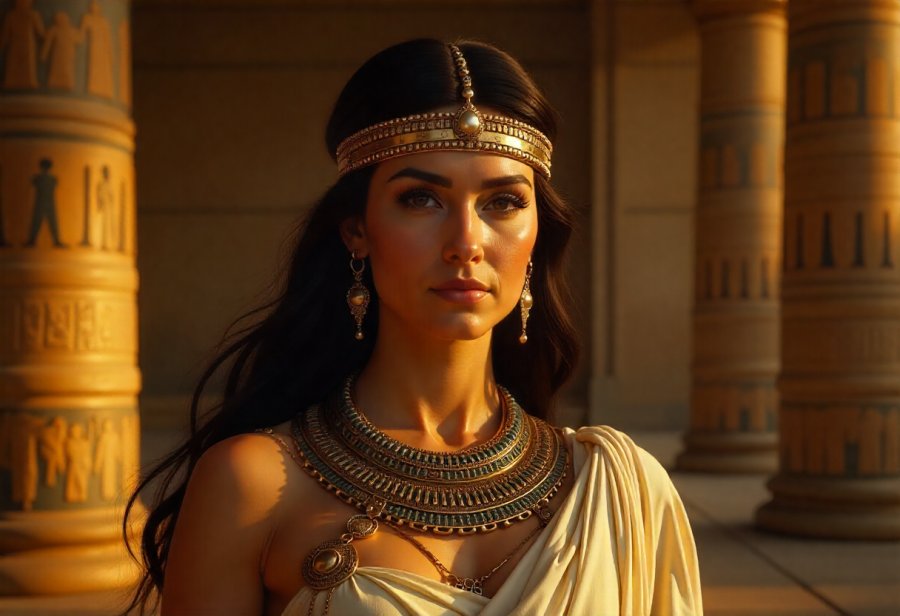
The Mind of a Queen: Exploring Cleopatra’s Linguistic Prowess, Scholarly Pursuits, and Strategic Genius
Cleopatra’s reputation as a brilliant leader is closely tied to her extraordinary linguistic skills. Fluent in Egyptian, Greek, and Latin, she was able to communicate directly with a diverse array of audiences, turning language into a strategic tool. This multilingual ability allowed her to build bridges with Egyptian priests, Greek scholars, and Roman officials alike, strengthening alliances and negotiating with confidence. Her mastery of these languages was not just a matter of communication; it was a way to demonstrate her intelligence and cultural sophistication, making her a more effective and respected ruler.
Beyond her language skills, Cleopatra’s scholarly pursuits reveal a deep commitment to knowledge that went well beyond the basics. She was a patron of the Library of Alexandria, fostering an environment where science, philosophy, and the arts flourished. Her personal engagement with scholars in mathematics, astronomy, and literature was rare for a monarch of her time. This intellectual curiosity was a deliberate leadership strategy—she understood that a ruler’s strength comes from continuous learning and cultural awareness, not just political power.
Strategic thinking was at the core of Cleopatra’s intelligence. She grasped the importance of timing and diplomacy, carefully cultivating alliances with Julius Caesar and Mark Antony. These relationships weren’t just personal or romantic; they were calculated moves designed to secure Egypt’s independence and expand her influence. Her ability to read her enemies, anticipate shifts in the political landscape, and adapt her approach kept her several steps ahead of rivals and threats.
What made Cleopatra truly formidable was her talent for blending her scholarly knowledge with practical politics. She used her understanding of Egyptian religion and Greek philosophy to legitimize her rule, connecting with priests and intellectuals across cultural boundaries. This cultural dexterity helped her foster loyalty and consolidate her authority within Egypt, even amid external pressures. Her capacity to navigate complex internal and external landscapes was rooted in her sharp mind and broad knowledge base.
Her mastery of multiple languages and her patronage of learning weren’t mere personal achievements—they were essential tools that amplified her influence. Cleopatra believed wisdom and knowledge were key to effective leadership. Her decisions, whether forging alliances or managing crises, always reflected her ability to synthesize information, assess risks, and act strategically. This mental agility set her apart from many of her contemporaries.
Cleopatra’s intelligence was the foundation of her enduring legacy. By reading her environment with acuity and employing her knowledge as a weapon, she transformed potential vulnerabilities into strengths. Her leadership exemplified how wit and cultural insight could shape history, not just raw power or charisma. Her story continues to inspire, illustrating that true leadership stems from a well-trained mind capable of strategic thought and adaptation.
In essence, her linguistic mastery, scholarly pursuits, and strategic mind form the core of her formidable intellect. These qualities allowed her to forge alliances, outmaneuver rivals, and sustain her reign in a turbulent era. Cleopatra’s ability to blend knowledge with diplomacy made her one of history’s most capable rulers—proof that intelligence and cultural savvy can be as powerful as any army or throne. Her legacy endures because she understood that the greatest weapon a leader possesses is their mind.
Legacy of Leadership: How Cleopatra’s Intellectual Strength Shaped Her Enduring Influence
Cleopatra’s influence endures largely because of her remarkable intellect and strategic mindset. Her ability to navigate a shifting political landscape, forge vital alliances, and manage internal rivalries was driven by a keen understanding of power dynamics. This mental agility turned potential threats into opportunities, elevating her from a figure often dismissed as merely beautiful to a leader defined by wit and wisdom. Her diplomatic skills and capacity to adapt to changing circumstances kept her at the helm in a turbulent era.
Her relationships with Julius Caesar and Mark Antony exemplify how her intelligence extended into practical politics. These alliances weren’t accidental; they were deliberate, calculated moves designed to protect Egypt’s sovereignty and expand her influence. Cleopatra knew when to assert authority and when to negotiate, often staying several steps ahead of her enemies. Her ability to read her environment and adjust her strategies was central to her sustained power and resilience.
Beyond diplomacy, Cleopatra’s patronage of arts and sciences reinforced her image as a learned ruler. Supporting the Library of Alexandria and engaging with scholars across disciplines fostered an environment of innovation and knowledge. Her personal curiosity and dedication to learning weren’t mere hobbies—they were strategic tools that strengthened her legitimacy and inspired loyalty among her people and allies alike. Her leadership was rooted in cultural sophistication, which she used to unify diverse factions within Egypt and project strength abroad.
Her cultural and intellectual pursuits created a lasting legacy that transcended her lifetime. Cleopatra proved that true leadership stems from mental acuity, strategic thinking, and a deep understanding of human nature. Her ability to blend Egyptian traditions with Hellenistic culture allowed her to connect with a broad spectrum of supporters, reinforcing her authority in a volatile world. This duality made her a resilient ruler who could withstand external pressures and internal upheavals.
Cleopatra’s legacy also highlights the enduring power of knowledge and diplomacy in leadership. Her story challenges the stereotype of leadership as solely about brute strength or charisma. Instead, it emphasizes that wisdom, adaptability, and cultural awareness are equally vital. Her mastery of these qualities enabled her to shape not only her own destiny but also the course of history, reminding us that the greatest power lies in the strength of the mind.
In the end, Cleopatra’s influence is a testament to the lasting impact of intellectual prowess in leadership. Her ability to turn knowledge into strategic advantage allowed her to leave a mark that still resonates today. Her story inspires modern leaders to recognize that true power often resides in the capacity to think several steps ahead, to understand complex human and political landscapes, and to use that understanding to forge a legacy that endures beyond the ages.
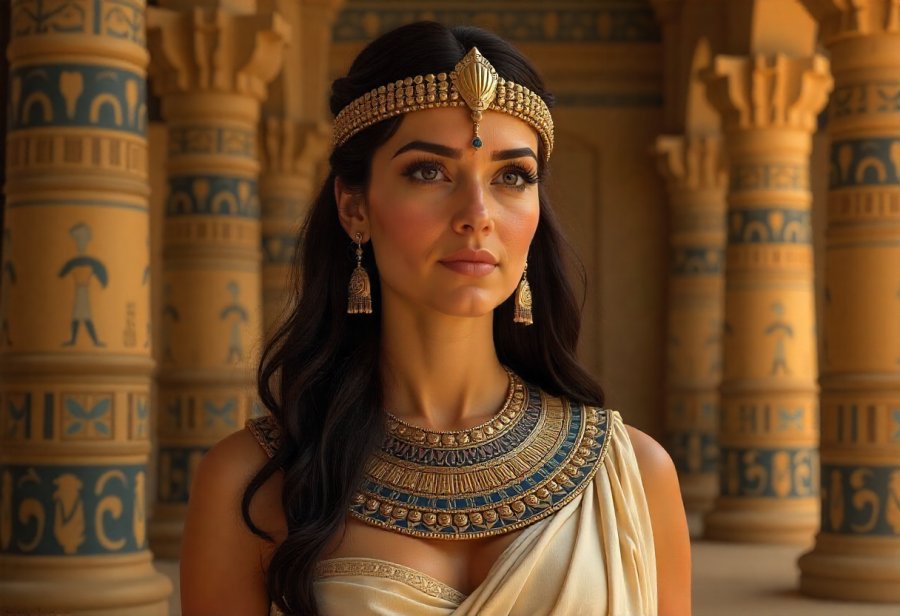
Modern Mirrors: Reimagining Cleopatra as a Scholar and Strategist in Today’s Culture
Today, Cleopatra’s intelligence is gaining recognition beyond the pages of history books, especially in popular culture. Films, books, and television series now tend to portray her as a brilliant strategist and scholar rather than just a glamorous figure. This shift reflects a broader understanding that her true power lay in her sharp mind, diplomatic skill, and cultural savvy. These portrayals paint her engaging with scholars at the Library of Alexandria, studying mathematics and astronomy, and making calculated political moves—highlighting her as a leader who used knowledge as her greatest weapon.
Modern interpretations often emphasize her multilingual abilities and her role as a masterful tactician. Showcasing her engaging with Egyptian priests, Greek philosophers, and Roman officials, these stories reinforce the idea that Cleopatra’s influence was rooted in her intellect and resilience. Such portrayals challenge the outdated image of her as merely a seductress, instead framing her as a formidable ruler who relied on wit, learning, and strategic thinking to shape her destiny.
This new perspective has also influenced how we see female leaders throughout history. Cleopatra has become a symbol of female intelligence and strategic leadership, proving that power isn’t solely about charm or appearance. Her story encourages the idea that women can wield influence through their decisions, their knowledge, and their diplomatic skills—traits that remain just as relevant today. Her image as a clever diplomat and scholar inspires a more nuanced appreciation of leadership, especially for women in positions of authority.
Throughout modern media, her ability to read her enemies, adapt her strategies, and build alliances remains a central theme. Her talent for timing and diplomacy exemplifies how influence often depends on understanding your environment and leveraging your intellect. By emphasizing her scholarly pursuits and diplomatic finesse, these portrayals underscore that Cleopatra’s true strength was her mental agility—the kind of leadership that endures long after the final credits or the last page.
This evolving image of Cleopatra as a scholar-queen underscores a timeless truth: leadership rooted in wisdom, cultural awareness, and strategic thinking can leave a lasting legacy. Her story continues to resonate because it highlights that true power comes from the strength of the mind, not just appearances or superficial charms. As a result, she remains an inspiring symbol for those who believe that intelligence and resilience are the keys to shaping history.
Her legacy, shaped by these modern portrayals, challenges us to see leadership as more than just authority—it’s about the capacity to think several steps ahead, to understand complex human and political landscapes, and to act wisely within them. Cleopatra’s story reminds us that the most enduring influence is born from knowledge, adaptability, and the courage to lead with insight. Her example encourages new generations to value intellect as the foundation of true power, ensuring her impact endures well beyond her time.